Establishing a new automotive workshop in Singapore’s competitive landscape demands meticulous planning and strategic investment. The process of outfitting your facility is foundational to its future success, yet it is often fraught with uncertainty: distinguishing essential from optional equipment, allocating significant capital without a clear return on investment, and avoiding technology that will not meet the demands of modern vehicles. To navigate this complex process with confidence, a definitive new auto workshop equipment list is not just beneficial-it is critical for achieving operational excellence from day one.
This comprehensive guide serves as your strategic blueprint for success. We will detail the essential equipment categories, from high-capacity vehicle lifts and foundational hand tools to the advanced diagnostic and calibration systems required for today’s complex vehicle ecosystem. Our checklist is engineered to help you build a high-functioning, profitable, and future-proof workshop, ensuring every investment in your facility contributes directly to your long-term technical capabilities and sustainable growth in the industry.
Key Takeaways
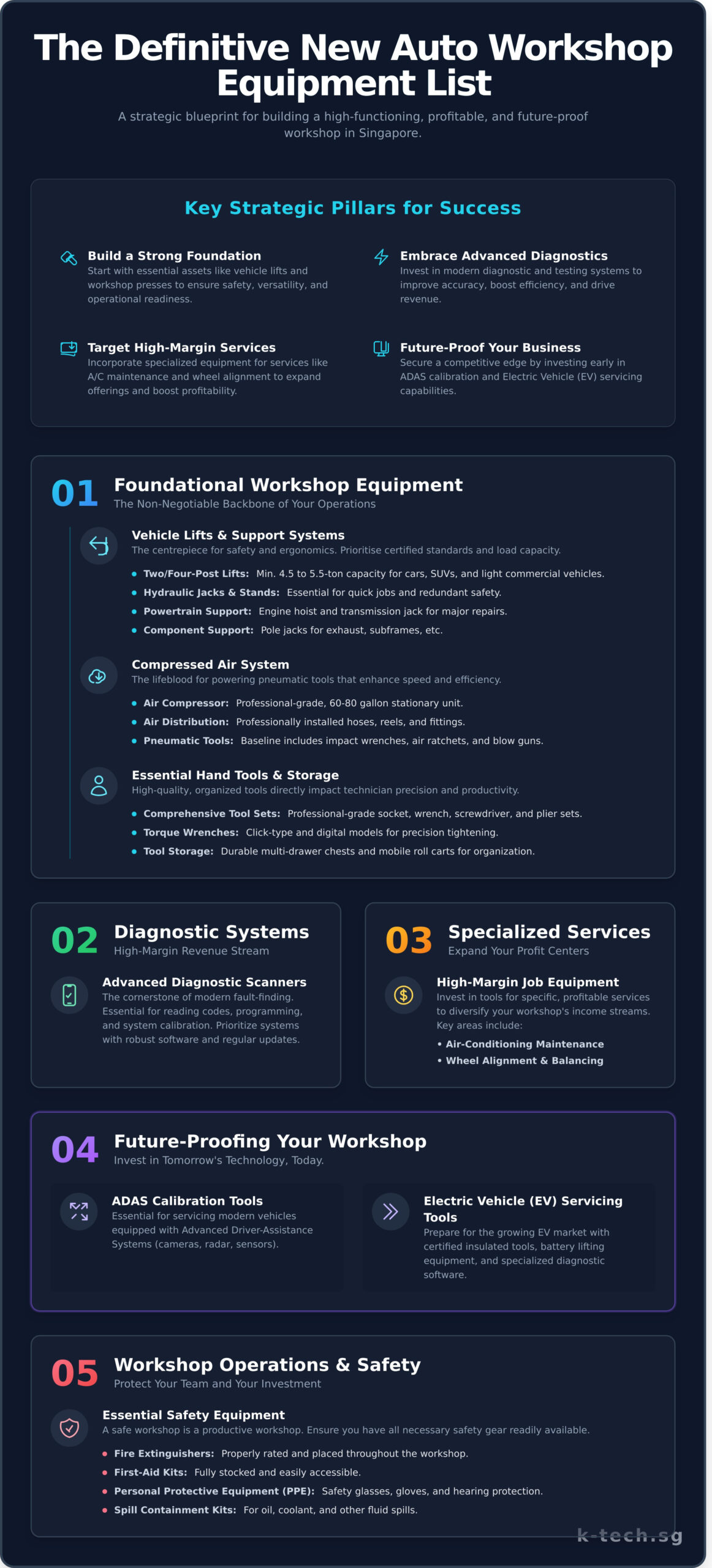
- Building a comprehensive new auto workshop equipment list starts with foundational assets like vehicle lifts and workshop presses, which are critical for ensuring operational safety and service versatility.
- Investing in advanced diagnostic and testing systems is non-negotiable for a modern workshop, as this directly enhances fault-finding accuracy, operational efficiency, and revenue generation.
- Strategically incorporating specialized equipment for high-margin services, such as air-conditioning maintenance and wheel alignment, allows you to expand your service menu and increase overall profitability.
- To secure a long-term competitive advantage in the Singapore market, workshops must future-proof their capabilities by investing in essential ADAS calibration and Electric Vehicle (EV) servicing tools.
Category 1: Foundational Workshop Equipment (The Non-Negotiables)
The items in this category form the operational backbone of any professional auto workshop in Singapore. These are the non-negotiable assets that directly influence technician safety, operational efficiency, and the capacity to service a diverse range of vehicles. This section of your new auto workshop equipment list represents the most significant initial capital investment in heavy machinery. Investing in high-quality, reliable equipment from the outset is a strategic decision that prevents costly downtime and ensures a safe working environment for your technical team. The specific configuration will depend on your service focus, as different Types of Auto Repair Shops have unique requirements.
Vehicle Lifts and Support Systems
Vehicle lifts are the centrepiece of a productive service bay, enabling technicians to perform diagnostics and repairs safely and ergonomically. Your selection must prioritise certified safety standards and adequate load capacity for the vehicles you intend to service.
- Two-Post or Four-Post Lifts: A minimum capacity of 4.5 to 5.5 tons is recommended to handle the majority of passenger cars, SUVs, and light commercial vehicles found on Singapore’s roads.
- Hydraulic Jacks and Stands: High-quality, heavy-duty hydraulic floor jacks and multiple sets of certified jack stands are essential for quick lifting jobs and providing redundant safety support.
- Powertrain Support: An engine hoist (engine crane) and a dedicated transmission jack are critical for any major engine or gearbox removal and installation tasks.
- Component Support: Pole jacks are indispensable for securely supporting components like exhaust systems or subframes during service.
Compressed Air System
A robust compressed air system is the lifeblood of a modern workshop, powering a wide array of essential pneumatic tools that enhance speed and efficiency. The system must be specified to support simultaneous use across multiple service bays without a drop in pressure or performance.
- Air Compressor: A professional-grade, stationary air compressor with a capacity of 60-80 gallons is a standard requirement for sustained, high-demand operations.
- Air Distribution: A professionally installed system of air hoses, retractable reels, and quick-disconnect fittings ensures that compressed air is readily accessible at every workstation.
- Pneumatic Tools: The initial toolkit should include high-torque impact wrenches, air ratchets, and blow guns as a baseline.
Essential Hand Tools and Tool Storage
While heavy machinery performs the lifting, a comprehensive inventory of professional-grade hand tools is required for nearly every task. The quality and organisation of these tools directly impact a technician’s precision and productivity. This is a core part of any new auto workshop equipment list.
- Comprehensive Tool Sets: Invest in professional-grade socket sets (in 1/4″, 3/8″, and 1/2″ drives), combination wrench sets, and a wide variety of screwdrivers and pliers.
- Torque Wrenches: Both click-type and digital torque wrenches are necessary to ensure all fasteners are tightened to precise manufacturer specifications, a critical aspect of vehicle safety.
- Tool Storage: Durable, multi-drawer tool chests and mobile roll carts are essential for tool organisation, security, and efficient workflow within the service bay.
Category 2: Core Diagnostic and Testing Systems
In the modern automotive service landscape, diagnostics represent a primary and high-margin revenue stream. The complex, computer-controlled systems in today’s vehicles demand advanced tools for accurate fault-finding and efficient repairs. Investing in a high-calibre diagnostic ecosystem is therefore a foundational step for any new auto workshop. When compiling your new auto workshop equipment list, prioritise systems that offer robust software support and regular updates to keep pace with evolving vehicle technology.
These tools are not merely for reading error codes; they are essential for programming, calibration, and system integration, directly impacting your workshop’s technical capabilities and profitability.
Advanced Diagnostic Scanners
The cornerstone of your diagnostic capability is a professional, all-systems diagnostic scanner. A device like those from the Autel MaxiSYS series provides OEM-level functionality, which is critical for comprehensive service. Look for systems with these advanced features:
- Bi-directional Control: Actively command vehicle components to test their functionality without manual intervention, dramatically reducing diagnostic time.
- ECU Coding and Programming: Perform complex tasks such as configuring new modules or reprogramming existing ones after a replacement.
- Extensive Vehicle Coverage: Ensure the tool supports a wide range of Asian, European, and American vehicles common on Singapore’s roads.
- Integrated Support: Features like built-in Technical Service Bulletins (TSBs) and guided diagnostics provide invaluable data to streamline the repair process.
Electrical System and Battery Testers
Electrical faults are a common challenge, and precise tools are non-negotiable. Your diagnostic toolkit must include a professional digital multimeter (DMM) with automotive-specific functions. This should be complemented by a modern battery and electrical system analyser, capable of accurately testing batteries (including EFB and AGM types for start-stop systems), starter motors, and alternators under load to provide clients with a complete system health report.
Inspection and Measurement Tools
Accurate diagnosis often requires visual confirmation and precise measurement. A video borescope is an invaluable asset for inspecting internal engine components like cylinder walls and valves without costly teardowns. Furthermore, a high-quality smoke machine is essential for quickly and accurately detecting leaks in EVAP, intake, and exhaust systems. Finally, equipping your technicians with digital brake disc and tire tread depth gauges ensures consistent, professional service and helps identify additional value-added repair opportunities.
Category 3: Specialized Service Equipment for High-Margin Jobs
Beyond foundational tools, a strategic investment in specialized equipment is essential for enhancing your service portfolio. This category focuses on systems that enable you to offer high-margin services in-house, reducing reliance on external specialists and capturing a larger share of customer expenditure. Incorporating these items into your new auto workshop equipment list is a direct path to boosting profitability and delivering comprehensive, one-stop automotive solutions.
These advanced systems often provide a rapid return on investment (ROI), but their acquisition must be complemented by professional training. Ensuring your technicians possess the technical proficiency to operate this equipment is crucial to maximizing value and upholding high service standards.
Wheel and Tire Service Bay
Modern vehicles demand precision wheel and tire services. Equipping your workshop with advanced systems is non-negotiable for handling the sophisticated wheel and tire packages common in the Singapore market, from performance cars to luxury SUVs.
- Modern Tire Changer: Must be capable of servicing run-flat and low-profile tires without damaging expensive rims.
- Computerized Wheel Balancer: Essential for delivering accurate, vibration-free results that meet OEM standards and ensure driver comfort.
- 3D or CCD Wheel Alignment System: Provides the precision required for complex suspension geometries and Advanced Driver-Assistance Systems (ADAS) calibration.
Fluid Management and Maintenance
Automated fluid exchange services are highly profitable and improve workshop efficiency. These systems ensure a thorough, clean, and rapid service that manual methods cannot replicate, justifying a premium service fee and increasing vehicle throughput.
- Fluid Containment: A complete set of oil drain pans, caddies, and a compliant waste oil storage system for safe operations.
- Brake Fluid Exchanger: Automates the bleeding and replacement process, ensuring critical system integrity and safety.
- Transmission Fluid Exchanger: Provides a comprehensive flush and fill service for automatic transmissions, a high-value maintenance task.
- Coolant Service Equipment: Includes a pressure tester for diagnostics and a flush machine for complete system maintenance.
Air Conditioning (A/C) Service
In Singapore’s climate, a functional A/C system is a necessity, making A/C service a consistent revenue stream. Professional equipment ensures your workshop can perform diagnostics and servicing efficiently and in compliance with environmental regulations.
- A/C Recovery, Recycling, and Recharging Station: A dual-gas station supporting both R134a and the newer R1234yf refrigerants is a forward-thinking investment.
- Electronic Leak Detector: Allows for the rapid and accurate diagnosis of refrigerant leaks.
- UV Dye and Inspection Kits: A fundamental tool for visually pinpointing hard-to-find leaks within the A/C system.
Category 4: Future-Proofing Your Workshop with ADAS and EV Tools
The automotive landscape in Singapore is undergoing a significant transformation, driven by the rapid adoption of Electric Vehicles (EVs) and the standardisation of Advanced Driver-Assistance Systems (ADAS). To ensure long-term viability and sustainable growth, a forward-thinking approach to your new auto workshop equipment list is not just advantageous-it is essential. Equipping your facility to service these advanced systems positions your business in a high-skill, high-margin segment of the market, providing a distinct competitive advantage over workshops that lag behind.
Investing in this category moves your workshop beyond routine maintenance and into specialized, high-value diagnostics and repairs. This strategic decision enhances your technical capabilities and establishes your brand as a leader prepared for the future of mobility.
Advanced Driver-Assistance Systems (ADAS) Calibration
Modern vehicles rely on a complex network of sensors for safety features like lane-keep assist and adaptive cruise control. Any service that affects vehicle geometry, such as windscreen replacement, suspension work, or collision repair, mandates precise ADAS recalibration. Essential equipment includes:
- A complete ADAS calibration frame and target system designed for precision and versatility across various manufacturers.
- Full compatibility and system integration with your diagnostic scanner to ensure streamlined, manufacturer-compliant procedures and accurate reporting.
Electric and Hybrid Vehicle (EV/HV) Service Equipment
As Singapore moves towards an all-electric vehicle population, operational readiness for EV and Hybrid servicing is a critical investment. Servicing high-voltage systems demands a stringent focus on safety and specialized tools. Adding these items to your new auto workshop equipment list is fundamental for market relevance.
- High-Voltage Diagnostic Tools: A CAT III or CAT IV rated multimeter and a dedicated insulation tester are non-negotiable for safely diagnosing high-voltage components.
- Safety Equipment: A complete set of 1000V-rated insulated hand tools and certified personal protective equipment (PPE) is mandatory to protect your technicians.
- Advanced EV Scanner: A specialized diagnostic tool, such as the Autel MaxiSYS EV Diagnostics platform, is required for in-depth battery pack analysis, state-of-health reports, and component testing.
- Specialized Handling Equipment: A high-capacity battery pack lifting table ensures the safe and efficient removal and installation of heavy EV battery units.
Building an integrated automotive solution that incorporates these advanced technologies secures your workshop’s position in the industry for years to come. Consult K-Tech Auto Solution on building a future-ready workshop solution and ensure your business is equipped for success.
Category 5: Workshop Operations and Safety Equipment
While diagnostic scanners and vehicle lifts often headline a new auto workshop equipment list, the tools that manage workflow, ensure safety, and maintain organisation are equally critical to long-term success. These foundational investments are not expenses but strategic assets that directly impact operational efficiency, technician productivity, and regulatory compliance. A well-organised and safe workshop protects your most valuable assets-your technicians and your business reputation-from day one.
Shop Furniture and Storage
An organised workspace is fundamental to minimising downtime and maximising output. Investing in high-quality, durable storage and furniture prevents clutter and streamlines parts management. A professional setup includes:
- Heavy-Duty Workbenches: Steel-frame benches equipped with industrial-grade vices provide a stable and reliable foundation for complex repair and assembly tasks.
- Systematic Storage: Utilise modular shelving units, parts bins, and lockable tool cabinets to create a comprehensive inventory management system.
- Fluid Storage Cabinets: Ensure safe and compliant storage of flammable or hazardous materials like oils, coolants, and chemicals with specialised, SCDF-approved cabinets.
Safety and Personal Protective Equipment (PPE)
Prioritising safety is non-negotiable and a core requirement for compliance with Singapore’s Workplace Safety and Health (WSH) Act. A robust safety infrastructure protects your team and mitigates business risk. Essential items include:
- Emergency Response: Strategically placed Class A, B, and C fire extinguishers and a fully-stocked industrial first-aid station are mandatory.
- Personal Protective Equipment (PPE): Provide every technician with high-impact safety glasses, chemical-resistant gloves, and appropriate hearing protection.
- Environmental Safety: Spill containment kits for oil and chemical leaks, along with clearly marked waste disposal bins for various materials, are essential for environmental compliance.
Management and Information Systems
In the modern automotive industry, data is as crucial as any physical tool. A robust digital infrastructure is the central nervous system of a high-performing workshop. This part of your new auto workshop equipment list should feature:
- Workshop Management Software: A dedicated system for scheduling, invoicing, customer relationship management (CRM), and inventory tracking streamlines all administrative processes.
- Technical Data Access: A ruggedised workshop computer or tablet with reliable internet access is vital for looking up repair manuals, wiring diagrams, and service bulletins.
- Reliable Connectivity: High-speed internet is essential for software updates, cloud-based data access, and remote diagnostics support.
While many off-the-shelf software packages exist, some businesses find that a custom-built database provides a more tailored and efficient solution for managing their unique workflow. If you’re exploring how a bespoke system could integrate these functions, you can read more about developing custom management tools.
Integrating these operational and safety systems creates a professional, efficient, and secure environment. For expert consultation on building a comprehensive automotive workshop ecosystem, visit k-tech.sg.
Finalizing Your Workshop’s Foundation for Success
Assembling the optimal new auto workshop equipment list is the critical first step towards establishing a profitable and sustainable automotive business in Singapore. This guide has illustrated that true operational excellence is achieved not just through foundational tools, but by strategically investing in advanced diagnostics and future-proof technologies for ADAS and EV servicing. This forward-thinking approach is essential for capturing high-margin jobs and securing a competitive edge.
However, procuring equipment is only the beginning. As the exclusive Singapore distributor for Autel advanced diagnostics and established specialists in ADAS and EV solutions, K-Tech provides an integrated automotive ecosystem. Our expertise is reinforced by our IMI (UK) accredited technical training academy, ensuring your team has the advanced capabilities to fully leverage your investment and maximize workshop efficiency.
Transform your equipment list into a comprehensive strategy for success. Request a Personalized Workshop Setup Consultation with Our Experts today. Let us be your trusted partner in building a leading, future-ready automotive service centre.
Frequently Asked Questions About Workshop Equipment
What is the single most important piece of equipment for a new workshop?
While every tool has its purpose, a high-quality vehicle lift is arguably the most critical investment for operational efficiency and technician safety. It provides the necessary access for a vast range of diagnostics, repairs, and maintenance tasks, from simple oil changes to complex transmission work. A reliable lift fundamentally enhances a workshop’s service capabilities and professional standards from day one, forming the backbone of your service bay and directly impacting productivity and profitability.
Should I buy new or used equipment when starting out?
This decision requires a strategic balance between initial capital outlay and long-term operational reliability. New equipment offers the significant advantages of manufacturer warranties, the latest technological capabilities, and dependable performance. While used equipment reduces upfront costs, it carries risks of unknown service history and potential downtime. We recommend investing in new, critical-use items like vehicle lifts and advanced diagnostic scanners, while considering quality used options for less essential, simpler hand tools and support equipment.
How much should I budget for a complete new workshop equipment setup?
For the Singapore market, a foundational budget for a new auto workshop equipment list should start from S$50,000 to S$80,000 for essential tools, a basic lift, and diagnostic capabilities. A more comprehensive setup, incorporating advanced diagnostics, wheel service equipment, and multiple service bays, can range from S$100,000 to over S$150,000. This figure is a baseline for equipment only and should be adjusted based on your workshop’s specific service specialisations and business scale.
Do I need EV and ADAS equipment immediately, or can I add it later?
While not a mandatory day-one purchase for every general workshop, integrating Electric Vehicle (EV) and Advanced Driver-Assistance Systems (ADAS) calibration equipment should be a primary strategic goal. Given the rapid vehicle electrification in Singapore, delaying this investment can limit your market relevance. We advise a phased approach: build a strong foundation with conventional tools, but plan to incorporate EV and ADAS capabilities within the first 12-24 months to ensure sustainable growth and future-proof your business.
What kind of training is required to use advanced diagnostic and ADAS tools?
Operating advanced diagnostic and ADAS calibration equipment demands specialized, formal training beyond basic mechanical knowledge. Technicians require comprehensive instruction on system integration, sensor functionality, and precise calibration procedures specific to different vehicle manufacturers. Professional certification from globally recognized bodies, such as the Institute of the Motor Industry (IMI), is essential to ensure accurate, safe, and compliant repairs, building trust with clients and safeguarding your workshop’s professional reputation.
How do I choose a diagnostic scanner that won’t be obsolete in a few years?
To ensure longevity, select a diagnostic scanner from a reputable manufacturer that provides consistent and comprehensive software updates. Key features to prioritise include broad vehicle coverage, support for modern communication protocols like CAN FD and DoIP (Diagnostics over Internet Protocol), and advanced functions such as online programming and coding. Investing in a tool with a clear development roadmap and strong technical support is the most effective strategy to protect your investment against rapid technological obsolescence.