The automotive industry is undergoing one of the most significant technological transformations in its history. Electric vehicles, intelligent vehicle systems, advanced driver-assistance systems, sophisticated battery management technology and software-driven diagnostics are fundamentally changing how vehicles are designed, diagnosed, maintained and repaired.
For K-Tech Auto Solution, keeping pace with this transformation requires more than simply supplying new equipment.
It requires continuous learning.
It requires exposure to emerging technologies.
Most importantly, it requires automotive professionals to understand how these technologies work in real vehicles and how they affect the future of automotive servicing.
In 2026, K-Tech took this commitment further through an intensive EV master study programme in Shenzhen, China—one of the world’s most important centres for electric vehicles, batteries, automotive electronics and new energy vehicle technology.
The programme provided valuable exposure to the rapidly developing Chinese electric vehicle ecosystem and allowed participants to study modern EV technology, diagnostic methodology, high-voltage systems, battery technology and the changing requirements of the automotive aftermarket.
For K-Tech, the objective is clear:
Bring advanced automotive knowledge back to Singapore and help prepare local technicians, workshops and automotive businesses for the next generation of vehicles.
Shenzhen has emerged as an important centre in China’s new energy vehicle ecosystem.
The city and the surrounding Greater Bay Area contain a dense concentration of technology companies, electronics manufacturers, battery-related businesses, EV manufacturers, component suppliers, software developers and automotive technology specialists.
This makes Shenzhen particularly relevant to automotive professionals seeking to understand where EV technology is heading.
Traditional automotive servicing was predominantly mechanical.
A technician needed strong knowledge of engines, transmissions, suspension, braking systems, air-conditioning and electrical circuits.
Modern electric vehicles require a significantly broader technical skill set.
Traction battery construction
Battery Management Systems (BMS)
State of Charge (SOC)
State of Health (SOH)
Cell voltage and battery parameters
High-voltage electrical architecture
High-voltage isolation procedures
Electric drive units
Inverters
DC-DC converters
On-board chargers
Thermal management systems
Electric air-conditioning compressors
Battery cooling
Temperature monitoringv
Refrigerant and thermal circuits
Advanced diagnostics
Vehicle communication networks
Software configuration
Electronic control modules
Insulation monitoring
ADAS systems
Camera calibration
Radar calibration
Sensor technology
Advanced vehicle electronics
The traction battery is one of the most important and valuable systems in an electric vehicle.
However, an EV battery should not simply be viewed as one large battery.
It is a sophisticated energy storage system consisting of cells, modules, sensors, cooling components, electrical connections, control electronics and sophisticated software.
The Battery Management System constantly monitors critical parameters.
Depending on vehicle design, these may include:
Understanding these parameters is increasingly important for EV diagnostics.
One important concept for automotive technicians and EV owners is the difference between State of Charge (SOC) and State of Health (SOH).
State of Charge indicates approximately how much usable energy remains in the battery at a particular time.
It is comparable, conceptually, to a fuel gauge.
State of Health is different.
SOH attempts to describe the battery’s condition relative to its expected or original performance.
As batteries age, their usable capacity and performance characteristics can change.
Battery condition can be influenced by numerous factors including temperature, charging behaviour, usage patterns, battery chemistry, vehicle design and age.
For workshops, understanding battery health information is increasingly important for:
However, technicians must also understand the limitations of battery data.
A number displayed by a diagnostic tool should not automatically be treated as a complete diagnosis.
Professional interpretation remains essential.
Electric vehicle repair introduces hazards that are different from conventional automotive servicing.
Modern EV traction systems operate at voltages capable of causing serious injury.
Therefore, high-voltage work requires proper knowledge, procedures and safety controls.
Before working on relevant EV systems, trained personnel must understand appropriate isolation procedures and manufacturer-specific requirements.
Depending on the work being carried out, procedures may include:
Electric vehicles replace the conventional engine-driven powertrain with electric propulsion systems.
While designs differ between manufacturers, common components may include:
The interaction between these systems requires technicians to adopt a system-level diagnostic approach.
Test before replacing.
Temperature management plays a major role in EV operation.
The battery, power electronics, electric motor and cabin climate-control system may all depend on carefully managed thermal conditions.
Depending on the vehicle, the thermal system may involve:
An issue within the thermal management system may affect battery performance, charging performance, passenger comfort or vehicle operation.
On some vehicles, the refrigerant system can interact with battery thermal management.
Therefore, EV air-conditioning service requires both correct equipment and appropriate technical understanding.
Many hybrid and electric vehicles use electrically driven high-voltage compressors.
This changes service considerations.
Correct refrigerant handling remains essential, but workshops must also consider compressor technology, electrical safety, lubricant compatibility and manufacturer requirements.
Diagnostic tools have become one of the most important pieces of equipment in a modern automotive workshop.
But professional diagnostics goes much further than reading and clearing Diagnostic Trouble Codes.
A comprehensive diagnostic process may involve:
The automotive industry is also seeing rapid growth in Advanced Driver-Assistance Systems (ADAS).
ADAS technologies may include:
These systems depend on cameras, radar sensors, control modules and precise vehicle geometry.
Following certain repairs or component replacements, calibration may be required according to manufacturer procedures.
Professional ADAS work therefore requires appropriate equipment, a suitable working environment and trained personnel.
Diagnostic tools have become one of the most important pieces of equipment in a modern automotive workshop.
But professional diagnostics goes much further than reading and clearing Diagnostic Trouble Codes.
A comprehensive diagnostic process may involve:
The automotive industry is also seeing rapid growth in Advanced Driver-Assistance Systems (ADAS).
ADAS technologies may include:
These systems depend on cameras, radar sensors, control modules and precise vehicle geometry.
Following certain repairs or component replacements, calibration may be required according to manufacturer procedures.
Professional ADAS work therefore requires appropriate equipment, a suitable working environment and trained personnel.
Every overseas learning programme should ultimately answer one question:
How does this benefit the automotive industry in Singapore?
For K-Tech, the answer lies in knowledge transfer.
Insights gained through technical exposure can help shape:
Singapore workshops operate in a highly competitive environment.
Labour is expensive.
Workshop space is limited.
Vehicle technology is becoming more complicated.
Under these conditions, productivity becomes extremely important.
Accurate diagnostics can reduce wasted labour.
Correct equipment can improve workflow.
Training can reduce mistakes.
Together, these capabilities can improve workshop efficiency.
K-Tech’s Shenzhen EV master study represents another stage in our technical development.
Our philosophy is that automotive education should not remain isolated within one classroom, one country or one technology platform.
The industry is global.
Vehicle technology evolves internationally.
Therefore, technical development should include exposure to different automotive ecosystems.
By observing developments within China’s rapidly expanding new energy vehicle industry, participants can better understand emerging technologies and anticipate the competencies workshops will require in the future.
The purpose is not simply to study technology for academic interest.
The purpose is to translate knowledge into practical workshop capability.
The international automotive landscape is changing quickly.
New electric vehicle platforms and brands are creating new requirements for independent workshops.
For automotive businesses, this represents both a challenge and an opportunity.
The challenge is technical readiness.
New vehicles may use unfamiliar architectures, diagnostic systems, components and service procedures.
The opportunity is that vehicle owners will increasingly require professional aftermarket support as the vehicle population grows.
Workshops that begin developing EV capabilities today will be better positioned for this transition.
This requires more than purchasing insulated gloves and calling a workshop “EV ready.”
Skilled technicians capable of working with modern vehicle technology.
Understanding of EV systems, diagnostics, battery technology and safety.
Appropriate diagnostic and workshop technology.
Proper high-voltage procedures, PPE and manufacturer requirements.
Structured diagnostic, repair and verification procedures.
Ongoing assistance to help workshops use technology effectively.
K-Tech Technical Training Academy
K-Tech Auto Solution has been supporting the automotive industry since 2004.
Our development has progressed from supplying workshop diagnostic equipment toward creating a broader ecosystem encompassing equipment, technical support, professional education and workshop solutions.
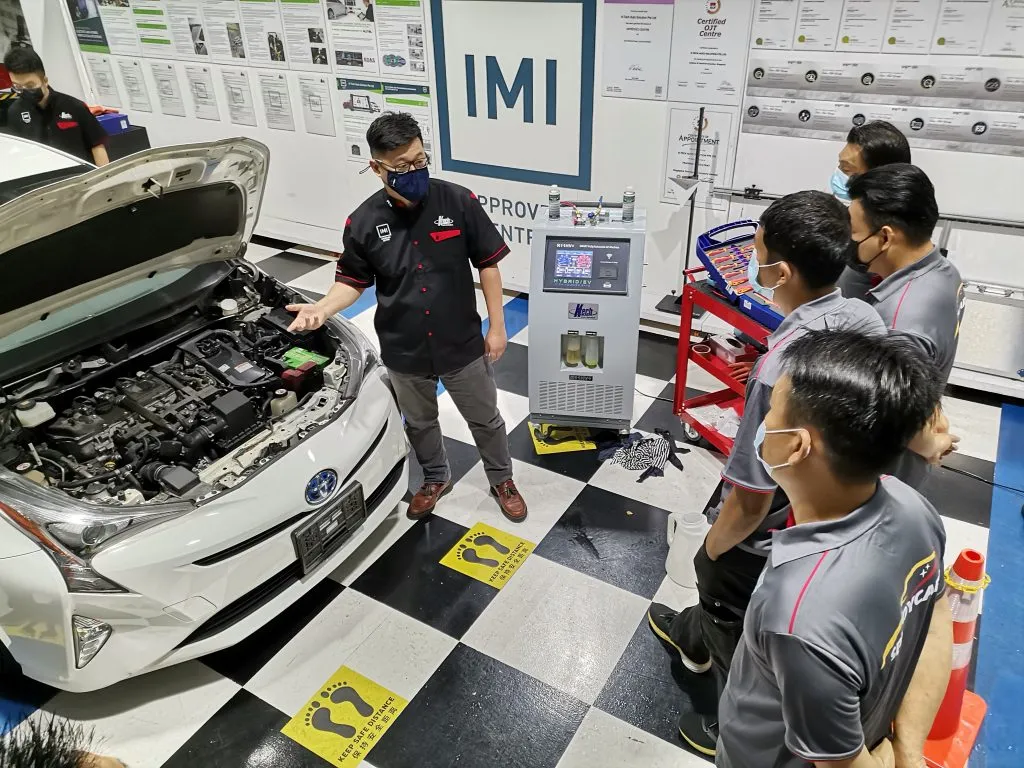
In 2019, K-Tech established its Technical Training Academy, accredited by the Institute of the Motor Industry (IMI UK).
This marked an important step in our mission to improve technical competency within the automotive industry.
Internationally aligned automotive education provides technicians with structured learning and competency development rather than relying solely on informal experience.
In 2024, K-Tech further strengthened its educational role through collaboration with Temasek Polytechnic.
This combination of industry exposure, professional training and academic collaboration supports our objective of preparing automotive professionals for increasingly complex vehicles.
The transition to electrification will not happen overnight.
Singapore’s vehicle population will continue to contain a mixture of:
This means automotive technicians need to understand multiple propulsion technologies.
A modern workshop cannot simply abandon conventional automotive knowledge.
Instead, technicians must expand their skill set.
This is why hybrid and EV training is particularly valuable.
Hybrid vehicles combine high-voltage electrical systems with conventional internal combustion powertrains.
Technicians may therefore need knowledge spanning both technologies.
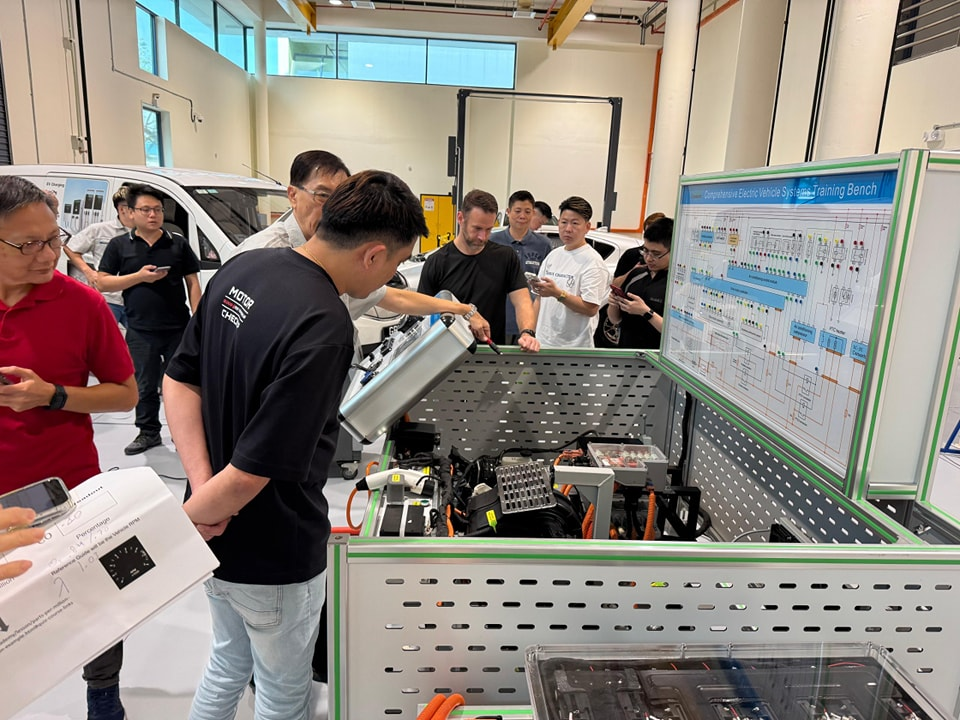
Automotive technology cannot be mastered through theory alone.
A technician may understand the theoretical definition of battery State of Health but still need practical experience interpreting real vehicle data.
Likewise, reading about ADAS calibration is very different from setting up equipment, positioning targets and completing an actual calibration procedure.
For this reason, hands-on learning remains central to professional automotive education.
The objective is competency—not simply attendance.
The definition of an automotive technician is changing.
Tomorrow’s technician may simultaneously be:
This does not mean traditional mechanical skills are becoming irrelevant.
They remain the foundation of automotive repair.
But technicians need additional competencies.
The strongest technicians of the future will be those capable of combining mechanical understanding with electronic and diagnostic reasoning.
K-Tech Technical Training Academy
K-Tech Auto Solution has been supporting the automotive industry since 2004.
Our development has progressed from supplying workshop diagnostic equipment toward creating a broader ecosystem encompassing equipment, technical support, professional education and workshop solutions.
In 2019, K-Tech established its Technical Training Academy, accredited by the Institute of the Motor Industry (IMI UK).
This marked an important step in our mission to improve technical competency within the automotive industry.
Internationally aligned automotive education provides technicians with structured learning and competency development rather than relying solely on informal experience.
In 2024, K-Tech further strengthened its educational role through collaboration with Temasek Polytechnic.
This combination of industry exposure, professional training and academic collaboration supports our objective of preparing automotive professionals for increasingly complex vehicles.
The transition to electrification will not happen overnight.
Singapore’s vehicle population will continue to contain a mixture of:
This means automotive technicians need to understand multiple propulsion technologies.
A modern workshop cannot simply abandon conventional automotive knowledge.
Instead, technicians must expand their skill set.
This is why hybrid and EV training is particularly valuable.
Hybrid vehicles combine high-voltage electrical systems with conventional internal combustion powertrains.
Technicians may therefore need knowledge spanning both technologies.
Automotive technology cannot be mastered through theory alone.
A technician may understand the theoretical definition of battery State of Health but still need practical experience interpreting real vehicle data.
Likewise, reading about ADAS calibration is very different from setting up equipment, positioning targets and completing an actual calibration procedure.
For this reason, hands-on learning remains central to professional automotive education.
The objective is competency—not simply attendance.
The definition of an automotive technician is changing.
Tomorrow’s technician may simultaneously be:
This does not mean traditional mechanical skills are becoming irrelevant.
They remain the foundation of automotive repair.
But technicians need additional competencies.
The strongest technicians of the future will be those capable of combining mechanical understanding with electronic and diagnostic reasoning.
Continuous learning is no longer optional.
Historically, a technician could learn a vehicle generation and apply similar knowledge for many years.
Modern automotive technology changes much faster.
Software updates can alter vehicle behaviour.
New battery chemistries emerge.
New ADAS systems are introduced.
Diagnostic platforms are continuously updated.
New vehicle architectures enter the market.
Therefore, technical education can no longer be viewed as something completed once at the beginning of a career.
It must become continuous.
K-Tech’s participation in programmes such as the Shenzhen EV master study reflects this philosophy.
We continue learning because the technology continues changing.
Singapore’s automotive sector will continue to evolve as electrification expands.
Workshops that traditionally specialised in engine maintenance will encounter more hybrid and electric vehicles.
Training institutions will need updated curricula.
Equipment suppliers will need more sophisticated technology.
Technicians will need new qualifications.
Workshop owners will need to make investment decisions about EV diagnostics, battery analysis and ADAS calibration.
K-Tech intends to remain an active participant in this transformation.
Our long-term direction is to combine four essential pillars.
No single country has all the answers to the future of automotive technology.
Europe, China, Japan, Korea and the United States each contribute different technologies, manufacturing capabilities and automotive philosophies.
For Singapore—a highly international automotive market—understanding multiple technology ecosystems is particularly valuable.
Vehicles from numerous global manufacturers operate on Singapore roads.
Our technicians therefore need broad technical adaptability.
The Shenzhen EV master study is part of this wider learning journey.
For workshops and automotive organisations looking to prepare for the next generation of vehicles, K-Tech provides integrated solutions covering:
Develop technical knowledge in modern hybrid and electric vehicle architecture, high-voltage safety and diagnostic methodology.
Professional diagnostic solutions for modern workshop applications.
Official diagnostic technology, technical guidance, training and local support for professional automotive users.
Advanced tools for electric vehicle system analysis and battery-related diagnostics.
Equipment and technical competency development for Advanced Driver-Assistance Systems.
Industry-focused programmes designed to help technicians build relevant capabilities for modern vehicles.
Support for automotive businesses looking to improve or expand their technical capabilities.
The international automotive landscape is changing quickly.
New electric vehicle platforms and brands are creating new requirements for independent workshops.
For automotive businesses, this represents both a challenge and an opportunity.
The challenge is technical readiness.
New vehicles may use unfamiliar architectures, diagnostic systems, components and service procedures.
The opportunity is that vehicle owners will increasingly require professional aftermarket support as the vehicle population grows.
Workshops that begin developing EV capabilities today will be better positioned for this transition.
This requires more than purchasing insulated gloves and calling a workshop “EV ready.”
True EV readiness requires:
People + Knowledge + Equipment + Safety + Processes + Technical Support
K-Tech aims to help workshops build all of these elements.
K-Tech’s role has evolved considerably since our establishment.
The traditional equipment supplier sells a machine.
Our objective is broader.
We want to help automotive businesses determine:
This consultative approach is increasingly important.
Buying technology without a capability plan can lead to underutilised equipment.
Before investing, workshop owners should consider their target vehicle population, expected service volume, technician capability, available workshop space and potential return on investment.
The definition of an automotive technician is changing.
Tomorrow’s technician may simultaneously be:
This does not mean traditional mechanical skills are becoming irrelevant.
They remain the foundation of automotive repair.
But technicians need additional competencies.
The strongest technicians of the future will be those capable of combining mechanical understanding with electronic and diagnostic reasoning.
Historically, a technician could learn a vehicle generation and apply similar knowledge for many years.
Modern automotive technology changes much faster.
Software updates can alter vehicle behaviour.
New battery chemistries emerge.
New ADAS systems are introduced.
Diagnostic platforms are continuously updated.
New vehicle architectures enter the market.
Therefore, technical education can no longer be viewed as something completed once at the beginning of a career.
It must become continuous.
K-Tech’s participation in programmes such as the Shenzhen EV master study reflects this philosophy.
We continue learning because the technology continues changing.
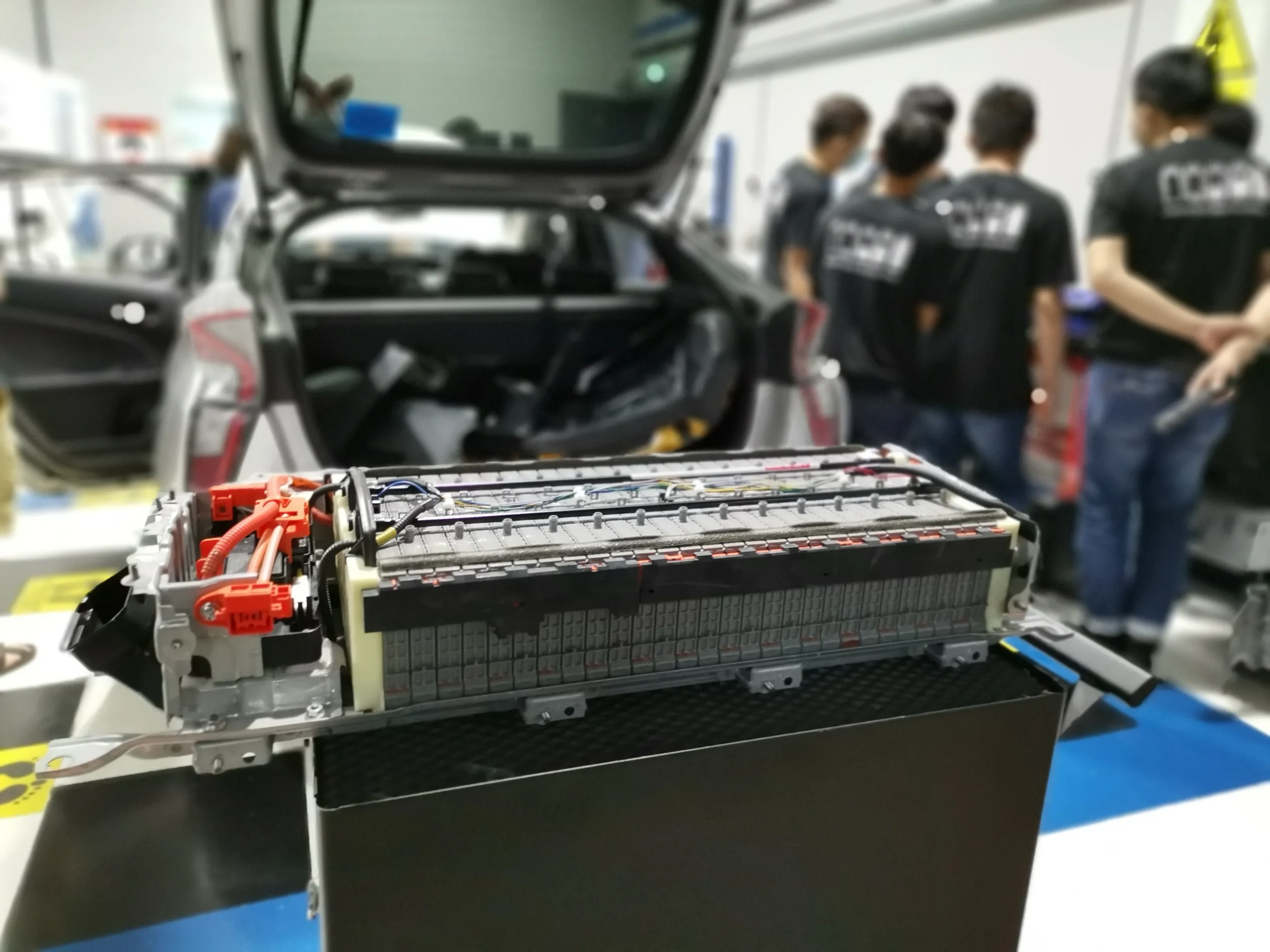
The traction battery is one of the most important and valuable systems in an electric vehicle.
However, an EV battery should not simply be viewed as one large battery.
It is a sophisticated energy storage system consisting of cells, modules, sensors, cooling components, electrical connections, control electronics and sophisticated software.
The Battery Management System constantly monitors critical parameters.
Depending on vehicle design, these may include:
Understanding these parameters is increasingly important for EV diagnostics.
One important concept for automotive technicians and EV owners is the difference between State of Charge (SOC) and State of Health (SOH).
State of Charge indicates approximately how much usable energy remains in the battery at a particular time.
It is comparable, conceptually, to a fuel gauge.
State of Health is different.
SOH attempts to describe the battery’s condition relative to its expected or original performance.
As batteries age, their usable capacity and performance characteristics can change.
Battery condition can be influenced by numerous factors including temperature, charging behaviour, usage patterns, battery chemistry, vehicle design and age.
For workshops, understanding battery health information is increasingly important.
It may become especially relevant to:
However, technicians must also understand the limitations of battery data.
A number displayed by a diagnostic tool should not automatically be treated as a complete diagnosis.
Professional interpretation remains essential.
The Battery Management System is effectively one of the central control systems protecting and managing an EV battery.
The BMS monitors the battery and determines how it should operate within defined limits.
When diagnosing battery-related issues, technicians may need to analyse live data and compare parameters rather than relying solely on fault codes.
For example, differences between individual cell voltages can provide useful diagnostic information.
Temperature readings can also be important.
An abnormal temperature reading may indicate a sensor issue, cooling problem or another condition requiring further investigation.
This demonstrates why EV diagnostic training must extend beyond scanner operation.
Technicians need to understand what the data represents.
Basic electric vehicle awareness is important, particularly for technicians who are beginning their transition from internal combustion engine vehicles to hybrid and electric vehicles.
But the industry’s requirements are advancing quickly.
Knowing that an EV contains a high-voltage battery is no longer sufficient.
Technicians increasingly need to understand how different systems interact.
For example, a vehicle experiencing reduced performance may not necessarily have a defective battery.
The underlying issue could involve thermal management, a battery module, an inverter, communication errors, insulation faults, sensors, software or another component within the high-voltage system.
Effective EV diagnostics therefore requires a systematic approach.
The technician must understand the architecture before interpreting the data.
The diagnostic process should move from:
Symptom → System → Data → Testing → Verification → Repair
rather than:
Symptom → Guess → Replace parts
This distinction is increasingly important as vehicle systems become more complex and components become more expensive.
K-Tech’s philosophy is therefore to develop both equipment capability and technician capability.
Advanced diagnostic equipment can provide tremendous amounts of vehicle information.
But information alone does not solve a problem.
A technician needs the knowledge to interpret it.
The automotive aftermarket is changing from a component-replacement industry into a system-diagnostics industry.
Consider a modern electric vehicle.
A customer may report:
“My driving range has dropped.”
There are many possible causes.
Battery degradation may be one possibility, but a professional diagnostic process should consider multiple factors.
These may include battery temperature, cell imbalance, charging patterns, tyre pressure, tyre rolling resistance, climate-control consumption, driving behaviour, software behaviour and battery management parameters.
Similarly, an EV that refuses to charge may have an issue involving the charging station, charging cable, charging port, communication protocol, on-board charger, battery management system, temperature conditions or high-voltage interlock system.
The ability to differentiate these possibilities is what separates basic fault-code reading from professional diagnostics.
This is why K-Tech continues to invest in advanced automotive diagnostic training.
Diagnostic tools have become one of the most important pieces of equipment in a modern automotive workshop.
But professional diagnostics goes much further than reading and clearing Diagnostic Trouble Codes.
A comprehensive diagnostic process may involve:
K-Tech supplies professional diagnostic solutions and provides technical support to workshops seeking to build these capabilities.
Our objective is not simply to put a scanner into a workshop.
It is to help workshops make productive use of diagnostic technology.
K-Tech has built extensive experience around professional automotive diagnostic equipment, including Autel diagnostic technology.
Modern Autel platforms provide workshops with access to extensive vehicle diagnostic functions across numerous vehicle systems.
For conventional vehicles, hybrids and EVs, advanced diagnostic capability can help technicians identify faults more efficiently and reduce unnecessary component replacement.
But equipment capability must be matched by user capability.
This is why K-Tech combines automotive diagnostic equipment in Singapore with training and technical support.
The relationship between equipment and education is fundamental.
A sophisticated diagnostic tool in the hands of an untrained operator may be underutilised.
The same equipment in the hands of a trained diagnostic technician can become a powerful productivity tool.
For generations, automotive technicians relied heavily on physical inspection, sound and mechanical measurements.
Those skills remain important.
But modern vehicles generate enormous amounts of electronic data.
Technicians increasingly need to interpret:
Data literacy is therefore becoming an automotive skill.
A diagnostic scanner does not replace the technician.
It extends the technician’s ability to understand the vehicle.
Temperature management plays a major role in EV operation.
The battery, power electronics, electric motor and cabin climate-control system may all depend on carefully managed thermal conditions.
This makes thermal management an increasingly important area for automotive workshops.
Depending on the vehicle, the thermal system may involve:
An issue within the thermal management system may affect battery performance, charging performance, passenger comfort or vehicle operation.
For workshops accustomed to treating air-conditioning as an isolated comfort system, EV architecture requires a broader perspective.
On some vehicles, the refrigerant system can interact with battery thermal management.
Therefore, EV air-conditioning service requires both correct equipment and appropriate technical understanding.
Traditional automotive air-conditioning technicians are familiar with compressors driven mechanically by the engine.
Many hybrid and electric vehicles instead use electrically driven high-voltage compressors.
This changes service considerations.
Correct refrigerant handling remains essential, but workshops must also consider compressor technology, electrical safety, lubricant compatibility and manufacturer requirements.
Incorrect service practices can potentially lead to expensive system problems.
As EV adoption increases, workshops need technicians who understand both automotive air-conditioning and EV electrical architecture.
Electric vehicle repair introduces hazards that are different from conventional automotive servicing.
Modern EV traction systems operate at voltages capable of causing serious injury.
Therefore, high-voltage work requires proper knowledge, procedures and safety controls.
Before working on relevant EV systems, trained personnel must understand appropriate isolation procedures and manufacturer-specific requirements.
Depending on the work being carried out, procedures may include:
Safety cannot be replaced by experience alone.
A technician may have decades of experience repairing conventional vehicles but still require specific training before performing high-voltage work.
This is one of the reasons structured EV technician training in Singapore is becoming increasingly important.
Electric vehicles replace the conventional engine-driven powertrain with electric propulsion systems.
While designs differ between manufacturers, common components may include:
The interaction between these systems requires technicians to adopt a system-level diagnostic approach.
A fault associated with propulsion may not necessarily originate from the motor itself.
The technician must examine relevant control modules, data and electrical conditions before reaching a conclusion.
This reinforces one of the central principles of modern automotive diagnostics:
Test before replacing.
Electrification is not the only major change affecting workshops.
Advanced Driver-Assistance Systems, commonly known as ADAS, are increasingly common across both EVs and conventional vehicles.
ADAS technologies may include:
These systems depend on cameras, radar sensors, control modules and precise vehicle geometry.
Following certain repairs or component replacements, calibration may be required according to manufacturer procedures.
This creates an entirely new technical competency for automotive workshops.
A windscreen replacement, suspension repair, wheel alignment adjustment, collision repair or sensor replacement may affect an ADAS system.
If calibration is required but not performed correctly, the system may not operate as intended.
Professional ADAS work therefore requires appropriate equipment, a suitable working environment and trained personnel.
K-Tech’s capabilities in ADAS calibration training in Singapore complement our work in vehicle diagnostics and EV technology.
The future automotive technician will increasingly need multidisciplinary skills.
Mechanical knowledge remains important.
But it must now be supplemented by electronics, diagnostics, high-voltage technology and calibration knowledge.
K-Tech’s Shenzhen EV master study represents another stage in our technical development.
Our philosophy is that automotive education should not remain isolated within one classroom, one country or one technology platform.
The industry is global.
Vehicle technology evolves internationally.
Therefore, technical development should include exposure to different automotive ecosystems.
By observing developments within China’s rapidly expanding new energy vehicle industry, participants can better understand emerging technologies and anticipate the competencies workshops will require in the future.
The purpose is not simply to study technology for academic interest.
The purpose is to translate knowledge into practical workshop capability.
Every overseas learning programme should ultimately answer one question:
For K-Tech, the answer lies in knowledge transfer.
Insights gained through technical exposure can help shape:
Singapore workshops operate in a highly competitive environment.
Labour is expensive.
Workshop space is limited.
Vehicle technology is becoming more complicated.
Under these conditions, productivity becomes extremely important.
Accurate diagnostics can reduce wasted labour.
Correct equipment can improve workflow.
Training can reduce mistakes.
Together, these capabilities can improve workshop efficiency.
The international automotive landscape is changing quickly.
New electric vehicle platforms and brands are creating new requirements for independent workshops.
For automotive businesses, this represents both a challenge and an opportunity.
The challenge is technical readiness.
New vehicles may use unfamiliar architectures, diagnostic systems, components and service procedures.
The opportunity is that vehicle owners will increasingly require professional aftermarket support as the vehicle population grows.
Workshops that begin developing EV capabilities today will be better positioned for this transition.
This requires more than purchasing insulated gloves and calling a workshop “EV ready.”
True EV readiness requires:
People + Knowledge + Equipment + Safety + Processes + Technical Support
K-Tech aims to help workshops build all of these elements.
K-Tech’s role has evolved considerably since our establishment.
The traditional equipment supplier sells a machine.
Our objective is broader.
We want to help automotive businesses determine:
This consultative approach is increasingly important.
Buying technology without a capability plan can lead to underutilised equipment.
Before investing, workshop owners should consider their target vehicle population, expected service volume, technician capability, available workshop space and potential return on investment.
The definition of an automotive technician is changing.
Tomorrow’s technician may simultaneously be:
This does not mean traditional mechanical skills are becoming irrelevant.
They remain the foundation of automotive repair.
But technicians need additional competencies.
The strongest technicians of the future will be those capable of combining mechanical understanding with electronic and diagnostic reasoning.
Historically, a technician could learn a vehicle generation and apply similar knowledge for many years.
Modern automotive technology changes much faster.
Software updates can alter vehicle behaviour.
New battery chemistries emerge.
New ADAS systems are introduced.
Diagnostic platforms are continuously updated.
New vehicle architectures enter the market.
Therefore, technical education can no longer be viewed as something completed once at the beginning of a career.
It must become continuous.
K-Tech’s participation in programmes such as the Shenzhen EV master study reflects this philosophy.
We continue learning because the technology continues changing.
K-Tech Auto Solution has been supporting the automotive industry since 2004.
Our development has progressed from supplying workshop diagnostic equipment toward creating a broader ecosystem encompassing equipment, technical support, professional education and workshop solutions.
In 2019, K-Tech established its Technical Training Academy, accredited by the Institute of the Motor Industry (IMI UK).
This marked an important step in our mission to improve technical competency within the automotive industry.
Internationally aligned automotive education provides technicians with structured learning and competency development rather than relying solely on informal experience.
In 2024, K-Tech further strengthened its educational role through collaboration with Temasek Polytechnic.
This combination of industry exposure, professional training and academic collaboration supports our objective of preparing automotive professionals for increasingly complex vehicles.
The transition to electrification will not happen overnight.
Singapore’s vehicle population will continue to contain a mixture of:
Singapore workshops operate in a highly competitive environment.
Labour is expensive.
Workshop space is limited.
Vehicle technology is becoming more complicated.
Under these conditions, productivity becomes extremely important.
Accurate diagnostics can reduce wasted labour.
Correct equipment can improve workflow.
Training can reduce mistakes.
Together, these capabilities can improve workshop efficiency.